How Exterior Paints Perform on Concrete, Brick and Plastered Walls Under Different Weather Conditions

Exterior paints perform best on concrete, brick and plaster when the coating matches the wall’s porosity and is applied in suitable weather. Coating performance depends on wall material, paint formulation and weather. Concrete, brick and plaster absorb moisture differently, expand at different rates and present varied surface textures. Choosing suitable exterior paints therefore begins with understanding the substrate and the local climate.
Rain-resistant coating for a well-prepared concrete wall may not act in the same way when applied to porous bricks or newly plastered surfaces. Accurate preparation, compatibility of primers and proper application conditions will help in retention of colour, adhesion and protective performance over time.
Why the Wall Material Matters
Concrete, brick and plaster differ in porosity, texture and moisture retention. These properties influence paint adhesion, coverage and resistance to rain, sunlight and temperature changes across varied local climates year-round.
Concrete
Concrete looks solid, yet its pores can hold moisture and fresh concrete may be strongly alkaline. Painting before it has cured and dried adequately can lead to blistering, peeling or uneven colour. Follow the coating manufacturer’s guidance on curing, then check for dust, cracks and weak patches.
Where required, a masonry primer helps regulate absorption and support adhesion. Dense concrete may absorb paint less readily than a rough section, so coverage needs to be checked across the whole wall.
Brick
Brick and mortar absorb water at different rates, which can leave an uneven finish if application is rushed. Rough faces need adequate coverage, while damaged joints can allow rain to reach the wall behind the paint. Salt residue should be investigated before painting.
Covering it may lead to recurring marks or coating failure. Clean the brick, repair loose mortar and allow the surface to dry. Choose a masonry coating and confirm whether the brick type or existing finish requires primer.
Plaster
When plaster is allowed to cure correctly, it forms a smooth surface. The freshly applied plaster can hold moisture, whereas older sections can be chalky and have tiny cracks. Clean the loose particles and fix any damage using filler.
The right primer will help to make sure that the surface has an even absorbency rate and prevents uneven shine and colouring. Cracks and moisture stains should be repaired prior to painting.
How Weather Affects the Finish
The weather plays a crucial role in determining how fast the paint will dry and whether it will blend well with the wall. Rain, humidity and heat may all impact the paint.
Rain and Humidity
Rain exposes weak joints, cracks and gaps around roof edges or pipes. Water can travel behind the paint and weaken adhesion, so a water-resistant coating cannot substitute for repairing leaks or damaged masonry.
High humidity slows drying and may extend the time needed between coats. Paint only when the wall is dry, and the forecast allows the product’s specified drying period. Heavy dew can also mark a fresh finish, especially when evenings cool after a warm day.
Heat and Sunlight
A wall in direct sun can become much hotter than the surrounding air. Paint may dry too quickly, making it difficult to maintain a wet edge and increasing the risk of lap marks. Ultraviolet exposure can fade pigments over time, particularly in lower-quality coatings.
Work on a shaded elevation where practical, and follow the stated air and surface temperature limits. Pale shades usually absorb less solar heat than very dark ones, which is useful to consider on west-facing walls.
Cold, Wind and Coastal Conditions
Low temperatures slow film formation, while a cool evening can leave condensation on a wall that felt dry earlier. Check overnight conditions as well as the temperature at application. Wind can carry dust onto wet paint and speed uneven drying.
In coastal areas, salt residue and persistent dampness call for thorough cleaning, sound repairs and a coating suited to the exposure. The product’s guidelines will help determine a suitable temperature range and dry weather period.
Selecting a Finish and Colour
You should always choose a coating designed for exterior masonry and the conditions the building faces. Breathable finishes allow water vapour to escape. But water-shedding products limit rain uptake. The right choice depends on the wall and the source of moisture. Avoid trapping dampness behind an unsuitable film.
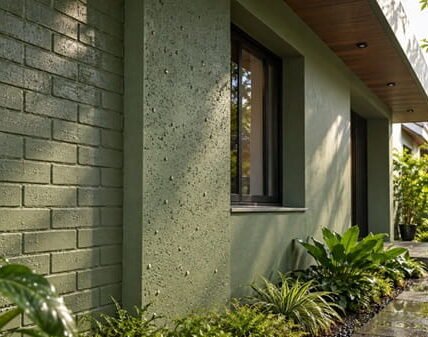
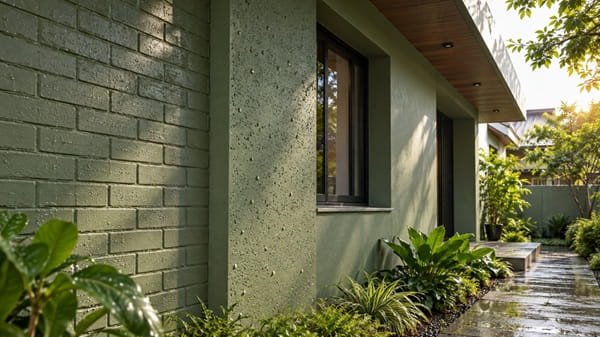
Colour affects appearance too. For example, a green colour can complement trees and garden planting, though it may look different on textured brick than on smooth plaster. Test a sample in sun and shade before choosing the final shade.
Conclusion
A durable exterior coating relies as much on maintenance as the type of paint used. Walls should be checked for any peeling, salt stains, and cracking after rainy weather. Ensure that the appropriate type of coating is used, based on the local conditions, as well as adhering to the maintenance advice offered by the manufacturer.
These measures assist in maintaining the wall’s look, minimising unnecessary repainting while providing adequate protection from environmental damage.